
If you’re planning a project in Mint Hill, NC, there’s a good chance you’ve already hit a confusing part of the process.
Maybe it’s unclear where your property lines actually are.
Maybe the site plan doesn’t match what’s on the ground.
Or maybe the town or county keeps asking for survey documents you don’t fully understand.
That’s usually where land development slows down.
At Meta Geomatics PLLC, we help clear that up with practical land development services that support real construction work. No fluff. No guesswork. Just accurate data that engineers, builders, and local reviewers can actually use.
We work across Mint Hill, NC and nearby Mecklenburg County development areas where residential growth, commercial builds, and infrastructure upgrades are happening fast.
And honestly, that speed is exactly why solid surveying matters more than ever.
Why Land Development in Mint Hill Is Different Right Now
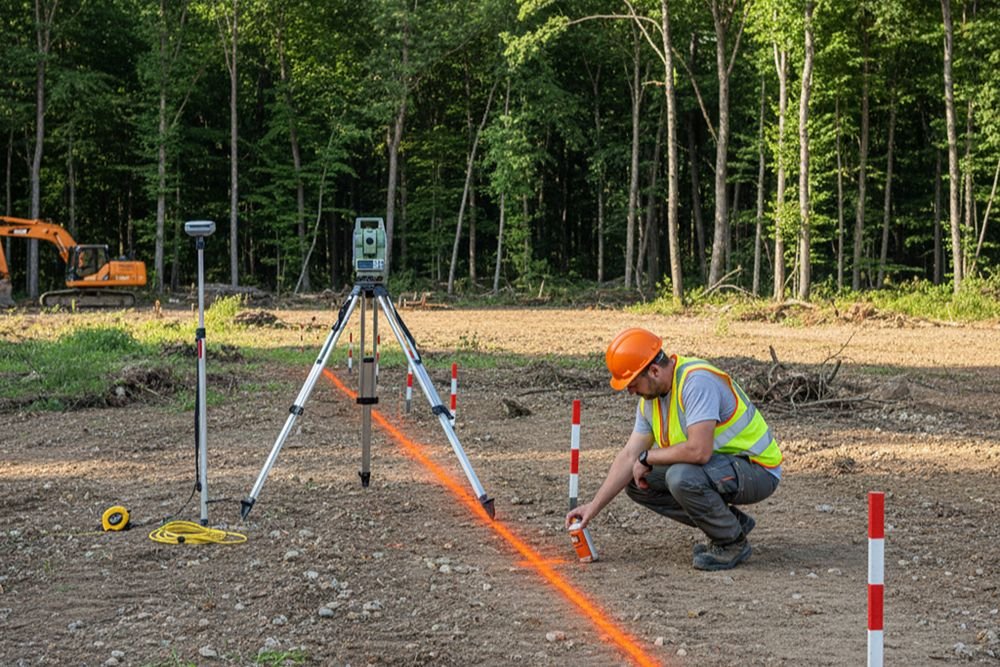
Mint Hill isn’t a quiet rural area anymore. It’s part of the growing Charlotte metro expansion zone.
That matters for land development work.
Here’s what we’re seeing on the ground:
- More residential subdivisions moving outward from Charlotte
- Commercial infill projects near major corridors
- Higher scrutiny from Mecklenburg County plan reviewers
- Faster permit cycles, but stricter accuracy requirements
- Older parcels being redeveloped or split
When growth speeds up, mistakes get more expensive.
A small boundary error or wrong elevation reading can delay permits, trigger redesigns, or stop construction completely.
What Land Development Services Actually Cover
A lot of people think land development surveying is just “measuring land.”
It’s more than that.
It’s the foundation of everything that happens before construction starts.
Here’s what it typically includes:
- Land Development Services
- Boundary Surveys
- Topographic Surveys
- Construction Staking
- Subdivision Design & Planning Support
- ALTA/NSPS Land Title Surveys
- Site Planning & Feasibility Surveys
- As-Built Surveys
- Right-of-Way Surveys
- Grading & Earthwork Volume Calculations
Each of these plays a different role in turning raw land into something buildable.
For example, a topo survey shows elevation changes. A boundary survey confirms legal property lines. Construction staking turns drawings into physical points on the ground so builders know exactly where to work.
Miss one step, and projects slow down fast.
How Land Development Services Actually Work (Step by Step)
Most people only see the final survey drawing. But there’s a full process behind it.
Here’s how it usually works:
Site Review and Planning
We start by looking at deeds, old plats, and county records. This helps us understand what the site is supposed to be versus what it might actually be.
Field Survey Work
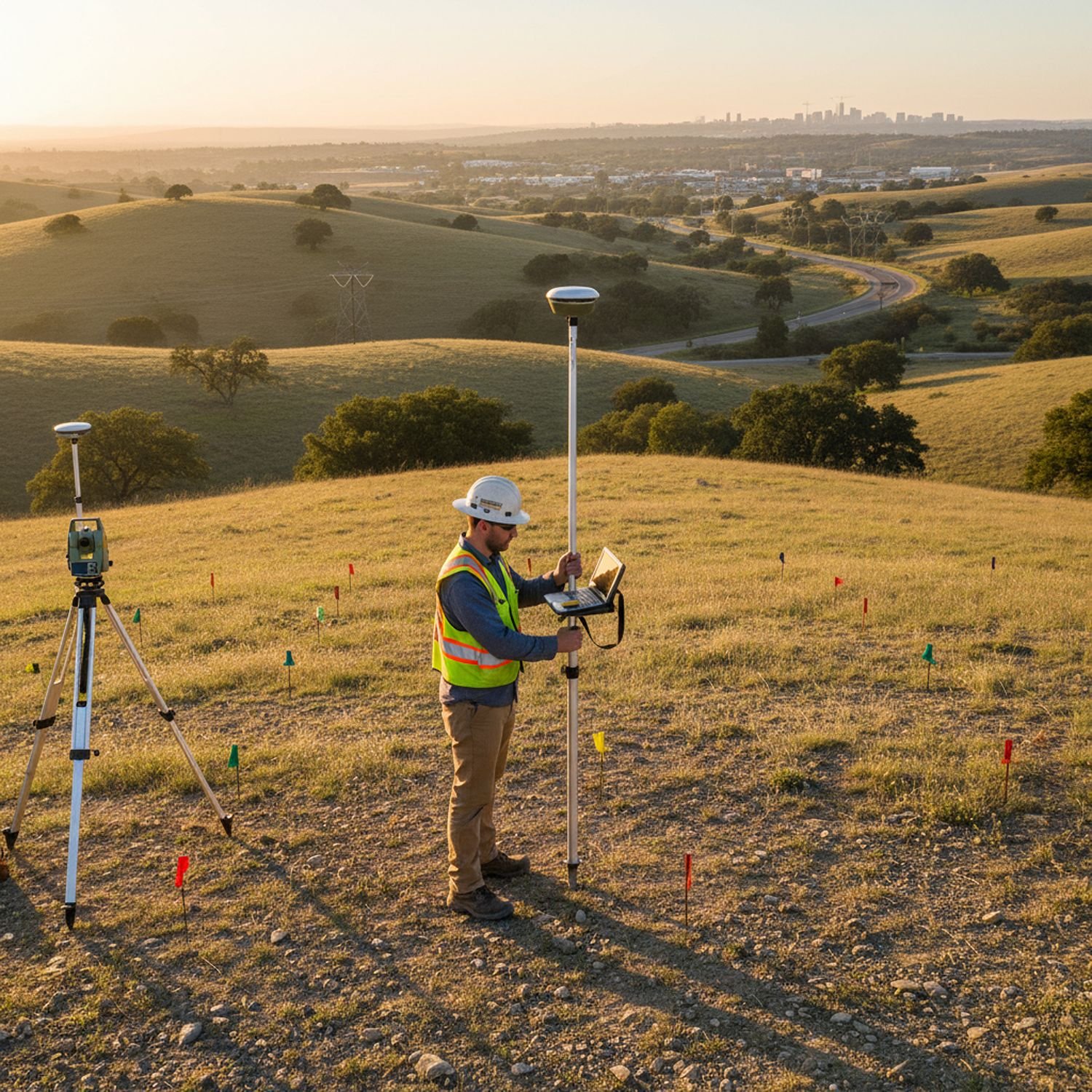
This is where the equipment comes in:
- GNSS / GPS surveying systems for positioning
- Total Station instruments for precise measurements
- UAV / Drone surveying for aerial mapping when needed
We collect real-world site data including elevations, structures, trees, utilities, and access points.
Data Processing and Mapping
Back in the office, we process field data using:
- AutoCAD Civil 3D
- GIS (Geographic Information Systems) mapping
- Coordinate geometry (COGO) calculations
This is where raw numbers become usable maps and drawings.
Design Support and Deliverables
We prepare deliverables used by:
- Engineers
- Architects
- Builders
- Local reviewers
This can include grading plans, site layouts, boundary plats, or construction staking data.
Construction Layout
Once approved, we move into field layout work using:
- Construction layout software
- Control points tied to geodetic networks
- Survey-grade benchmarks
This step helps builders place everything exactly where it belongs.
Where Most Projects Go Wrong (And How to Avoid It)
Here’s something people don’t talk about enough.
Most land development delays are not caused by construction problems. They’re caused by early surveying mistakes.
Common issues we see:
- Old boundary lines being reused without verification
- Missing elevation data causing drainage redesigns
- Site plans not matching actual field conditions
- Poor coordination between surveyor and engineer
- Ignoring floodplain mapping requirements
One mistake we see often: someone uses outdated survey data from a previous owner.
It seems fine at first. Until permitting rejects it.
That’s why updated, site-specific data matters.
We also follow:
- Digital terrain modeling (DTM)
- Survey-grade elevation benchmarks
- FEMA floodplain guidance when applicable
These details prevent redesigns later.
Supporting Tools That Improve Accuracy
Modern land development surveying is not just fieldwork anymore. It’s a mix of technology and real-world verification.
We use:
- LiDAR scanning technology for dense surface capture
- Field data collection systems for real-time updates
- Platting and subdivision mapping for land division planning
- Geodetic control networks for coordinate accuracy
These tools help reduce errors and improve consistency across large or complex sites.
But here’s the important part.
Tools don’t replace judgment. They support it.
Land Development Challenges Specific to Mint Hill
Working in Mint Hill and surrounding Mecklenburg County areas comes with a few repeat challenges:
- Mixed older rural parcels and newer subdivisions
- Unclear historic boundary records
- Drainage and grading sensitivity in developing zones
- HOA and subdivision design rules
- County-level permitting requirements that change by project type
We’ve seen projects delayed simply because the survey didn’t match county expectations.
That’s why local experience matters.
Not just technical skill, but familiarity with how the area actually develops.
Why People Choose Meta Geomatics PLLC
Here’s what actually matters when choosing a land development survey partner:
At Meta Geomatics PLLC, we focus on work that holds up during permitting, construction, and inspections.
That means:
- Licensed under North Carolina Professional Land Surveyor (PLS) standards
- Licensed & insured surveying services
- Professional liability insurance coverage
- Compliance with Mecklenburg County land development regulations
- ALTA/NSPS Land Title Survey standards when required
- Certified boundary and construction staking practices
- Accurate deliverables used for permitting and engineering approval
- Field-to-office quality control checks before final delivery
- Local project experience in Mint Hill and surrounding Charlotte region
We don’t assume data is correct until it’s verified on-site.
That mindset prevents most of the issues that slow projects down.
Real Benefit Most People Don’t Expect
Most clients think they’re hiring a surveyor to “draw lines.”
But the real value is this:
You avoid expensive rework.
A corrected grading plan or adjusted site layout after construction starts can cost far more than the survey itself.
Good land development surveying helps you:
- Move through permitting faster
- Reduce engineering redesigns
- Avoid boundary disputes
- Prevent construction delays
- Keep projects aligned with county rules
That’s the part people usually realize too late.
Final Thoughts
Land development in Mint Hill is moving fast. That’s good for growth, but it also means less room for error.
Accurate surveying isn’t just paperwork. It’s what keeps projects moving without surprises.
If you’re planning a project and want clear, build-ready data from the start, working with a local, detail-focused surveying team makes a real difference.
Meta Geomatics PLLC supports land development projects across Mint Hill, NC with precise fieldwork, reliable mapping, and construction-ready deliverables that help keep projects on track.
FAQs About Land Development Services in Mint Hill, NC
How long does a land development survey take?
It depends on property size and complexity. Small residential sites can take a few days. Larger subdivision projects may take longer due to fieldwork and review cycles.
Do I need a survey before applying for permits in Mint Hill?
In most cases, yes. Mecklenburg County often requires updated boundary or topo surveys before approving site plans.
What’s the difference between a boundary survey and a topo survey?
A boundary survey defines legal property lines. A topo survey maps elevation, terrain, and site features. Most development projects need both.
Do you work with engineers and builders directly?
Yes. We regularly coordinate with engineers, architects, and contractors so the survey data matches construction plans.
What if my property is in a flood zone?
We account for FEMA floodplain mapping when needed. This affects grading, design, and sometimes building placement.
Why is construction staking important?
It turns plans into real-world points. Without staking, builders would not know exact placement for foundations, utilities, or grading.
Services Areas
Serving North Carolina, NC Wake County & the Greater Triangle
Raleigh Metro
- Angier
- Apex
- Carrboro
- Cary
- Chapel Hill
- Clayton
- Durham
- Fuquay-Varina
- Garner
- Hillsborough
- Holly Springs
- Knightdale
- Morrisville
- Pittsboro
- Raleigh
- Rolesville
- Wake Forest
- Wendell
- Zebulon
Charlotte Metro
- Belmont
- Charlotte
- Concord
- Cornelius
- Davidson
- Gastonia
- Harrisburg
- Huntersville
- Indian Trail
- Kannapolis
- Matthews
- Mint Hill
- Monroe
- Mount Holly
- Pineville
- Wesley Chapel
Can't find your area?
Give us a call at (919) 402-6742. We regularly take on projects throughout the Piedmont and Coastal regions of North Carolina for commercial clients with specific needs.

Reviews
Trusted by Homeowners, Contractors & Developers Across Wake County
Ready to Get Started?
Every successful property transaction and construction project starts with accurate information. Whether you need a simple boundary survey or comprehensive 3D reality capture, the Meta Geomatics team is ready to help.
Contact us today for a free, no-obligation quote:
Phone
Office Hours
Monday - Friday, 8:00 AM - 5:00 PM
Most quotes provided within 24 hours. Emergency and expedited services available.