
If you’re building anything in Chapel Hill, there’s one thing you can’t afford to get wrong: where things actually go on the ground.
A building set a few inches off. A foundation that doesn’t match plans. Utilities that don’t line up. These are the kinds of problems that turn into delays, change orders, and frustration fast.
That’s where construction surveying comes in.
At Meta Geomatics PLLC, we provide construction surveying services across Chapel Hill, NC and the surrounding Research Triangle area. Our job is simple: translate engineering plans into real-world precision so builders can work with confidence from day one.
This page breaks down what construction surveying actually includes, how it works, and what you should expect when hiring a land surveyor in Chapel Hill.
What Construction Surveying Actually Does (In Plain English)
Construction surveying is the process of taking design plans and physically marking them on the ground.
Think of it like this:
- Engineers design it on paper or software
- Architects refine the layout
- Contractors build it
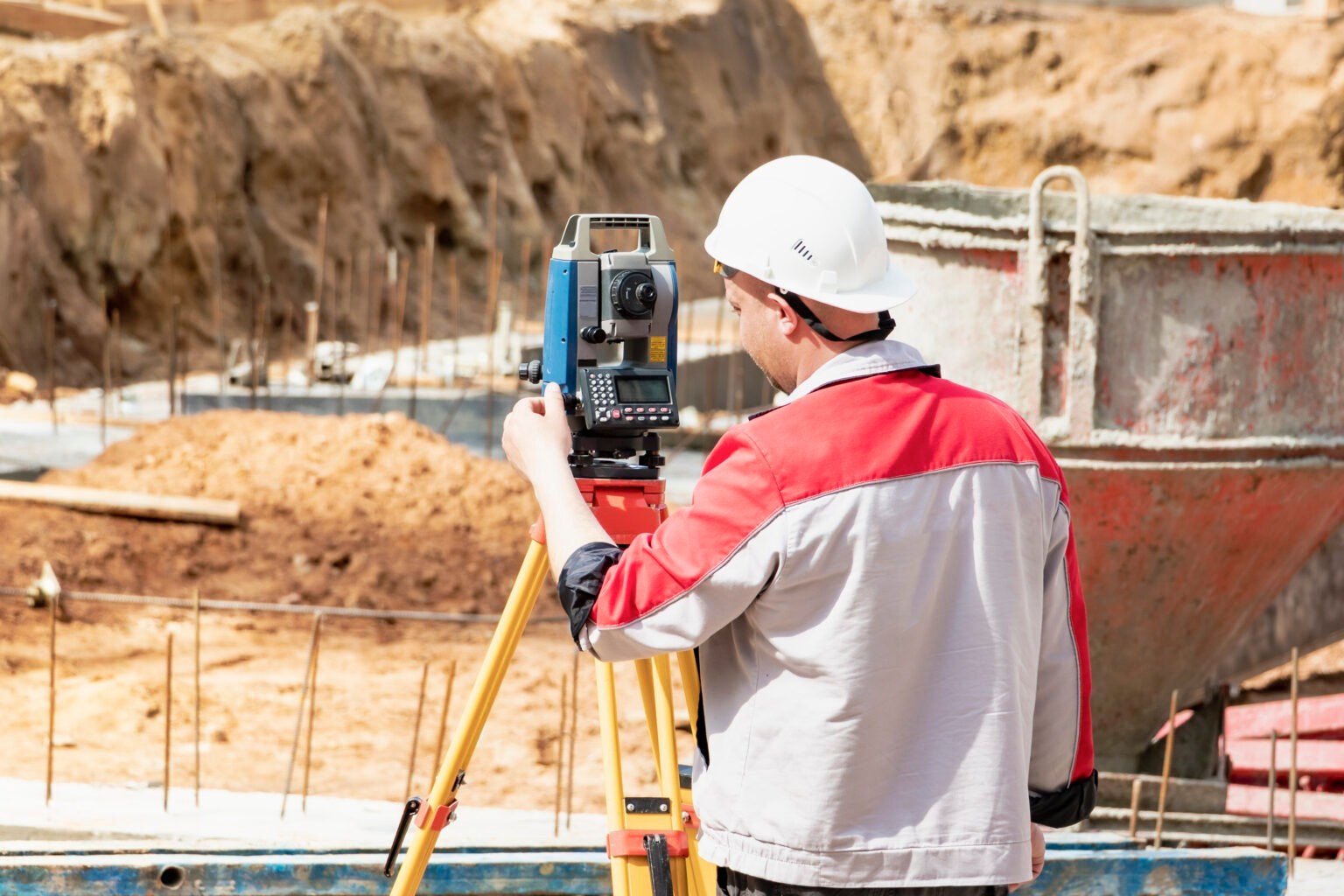
- Surveyors make sure everyone is building in the right place
We handle the “on-the-ground truth.”
That includes:
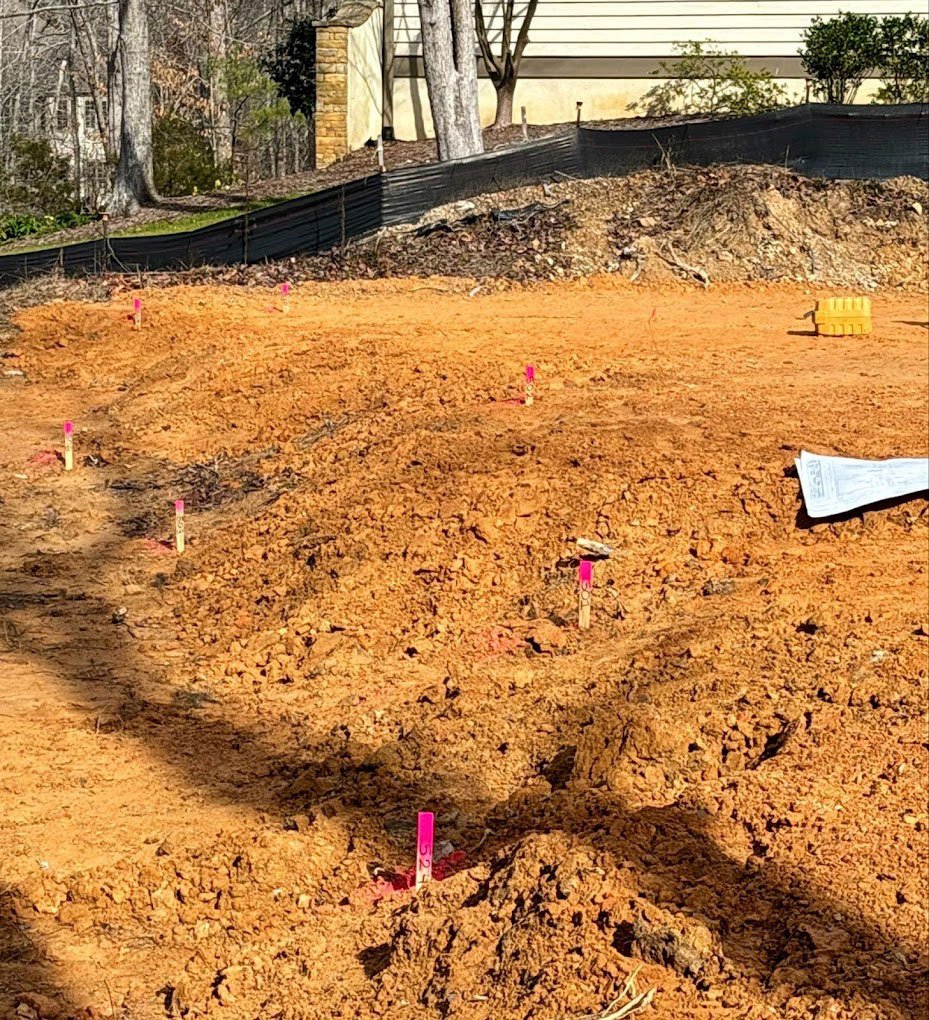
- Marking building corners
- Setting elevation points
- Laying out roads, utilities, and foundations
- Checking grades before and during construction
- Verifying what was actually built matches the plans
Most people only think about surveying at the start of a project. In reality, it continues through the entire construction process.
Supporting Survey Services That Often Go Hand-in-Hand
Many construction projects also need:
- Boundary Surveying
- Topographic Surveying
- Site Planning Surveys
- ALTA/NSPS Land Title Surveys
- Subdivision and platting work
- Utility mapping and location services
- GIS data collection and mapping
- Drone / UAV aerial surveying
These services help design teams and contractors make better decisions before construction begins.
Why Construction Surveying Matters in Chapel Hill
Chapel Hill isn’t flat, simple land. Between rolling terrain, wooded parcels, older subdivisions, and dense redevelopment areas, small mistakes can turn into big problems.
In areas like:
- Downtown Chapel Hill
- Franklin Street, Chapel Hill
- Meadowmont Village
- Carrboro, North Carolina
…construction sites are often tight, regulated, and packed near existing structures.
A layout error of even a few inches can cause:
- Property line disputes
- Failed inspections
- Drainage issues
- Foundation misalignment
- Utility conflicts
And once concrete is poured, fixing mistakes gets expensive fast.
This is why builders in the region rely on precise construction staking from the beginning.
Who We Work With
Construction surveying supports almost every type of project in Chapel Hill:
- Home builders and custom home projects
- Commercial developers
- Civil engineers
- Architects
- General contractors
- Municipal and infrastructure teams
We also frequently support projects near:
- University of North Carolina at Chapel Hill
- The Research Triangle development corridor
- Highway and utility expansion zones
- Residential subdivisions and infill redevelopment sites
Whether it’s a single home or a multi-acre commercial site, the goal stays the same: build it exactly where it belongs.
Core Construction Surveying Services
Construction surveying isn’t one task. It’s a set of services that support each phase of building.
Construction Staking & Layout (Primary Service)
This is the heart of construction surveying.
We mark:
- Building corners
- Foundation lines
- Road alignments
- Utility routes
- Retaining walls
- Parking areas
We use engineering plans and translate them into physical stakes, nails, and markings the crew can follow.
Site Control Establishment
Before construction starts, we establish reference points across the site.
These control points:
- Keep all measurements consistent
- Allow contractors to work from a shared system
- Reduce layout errors during construction
Elevation and Grade Verification
Water drainage issues usually come from bad grading.
We check:
- Slopes
- Elevation differences
- Cut and fill balance
- Foundation heights
This helps avoid ponding, erosion, or drainage failures later.
As-Built Surveys
Once construction is complete (or partially complete), we verify what was actually built.
This includes:
- Final building locations
- Utility positions
- Finished grades
- Compliance with design plans
As-builts are often required for permitting and project closeout.
Boundary and Pre-Construction Surveys
Before anything is built, you need to confirm:
- Property lines
- Easements
- Encroachments
- Legal setbacks
This step prevents costly legal issues later.
Tools and Technology We Use
Construction surveying today is far more advanced than just a tape measure and tripod.
We use professional-grade equipment like:
- GNSS / RTK GPS survey systems
- Total stations
- Digital levels
- UAV / drone photogrammetry systems
- Laser scanning / LiDAR equipment
- Field data collectors
- Survey stakes, rebar, and marking systems
For processing and mapping, we rely on:
- AutoCAD Civil 3D
- GIS mapping workflows (ArcGIS-style systems)
- Survey data processing software
- 3D point cloud tools
- Digital terrain modeling systems
This helps us move from field measurements to usable construction data quickly and accurately.
How Our Construction Surveying Process Works
Most clients just want to know: “What happens after I call you?”
Here’s the simple version.
Step 1: Review Your Plans
We go through your construction drawings, site plans, and engineering files.
We look for:
- Layout requirements
- Elevation needs
- Control points
- Special site constraints
Step 2: Site Visit and Control Setup
We establish site control points so everything is tied to a reliable coordinate system.
Step 3: Field Layout / Staking
We mark the site based on your plans.
This may include:
- Corners
- Centerlines
- Offset stakes
- Utility routes
Step 4: Verification and Adjustments
Construction sites change fast. We verify and adjust layout as needed.
Step 5: Final As-Built Survey (If Required)
We document what was actually built for records, permits, or approvals.
Common Problems We Help Prevent
Most construction issues we see are avoidable.
Here are a few:
- Building shifted due to incorrect staking
- Utilities installed in wrong location
- Grading that causes drainage issues
- Fence or wall encroaching property lines
- Inspection delays due to missing survey data
A lot of people assume construction errors come from bad building work. Often, it starts with incorrect layout.
Local Knowledge Matters More Than People Think
Chapel Hill has its own challenges:
- Hilly terrain in many areas
- Tree-dense lots that block signals
- Older subdivisions with unclear records
- Tight urban redevelopment zones
We regularly work across:
- Jordan Lake State Recreation Area region projects
- Carrboro residential expansions
- Chapel Hill infill development
- Research Triangle infrastructure work
Local experience helps avoid surprises once fieldwork starts.
Why Builders Choose Meta Geomatics PLLC
We are Meta Geomatics PLLC, a licensed land surveying company focused on accurate field data and construction support.
Here’s what clients typically value:
- Licensed Professional Land Surveyors (North Carolina Board compliant)
- Fully insured for residential and commercial projects
- Construction-grade precision using modern equipment
- Experience working with contractors, engineers, and architects
- Clear, usable deliverables for permitting and construction
- Familiarity with Chapel Hill zoning and development conditions
- Strong QA/QC process on every job
We don’t overcomplicate things. We just make sure your project is placed correctly the first time.
When You Should Call a Construction Surveyor
Call early if:
- You’re about to break ground
- You need staking for foundations or utilities
- You’re unsure about property boundaries
- Your site has elevation or drainage concerns
- You need an as-built survey for inspection or closing
Waiting until construction starts is where most costly mistakes happen.
Service Area
We serve:
- Chapel Hill, NC
- Carrboro, NC
- Durham County
- Orange County
- Raleigh–Durham–Chapel Hill corridor (Research Triangle Region)
Final Thoughts
Construction projects move fast, but land doesn’t change. That’s why surveying matters so much.
If your project is in Chapel Hill, NC, getting accurate construction layout from the start can save time, money, and stress later on.
At Meta Geomatics PLLC, we focus on one thing: helping you build exactly what was designed, exactly where it belongs.
FAQs About Construction Surveying in Chapel Hill, NC
What does a construction surveyor actually do?
A construction surveyor marks the exact location of buildings, roads, and utilities on the ground based on engineering plans. They also verify elevations and check that construction matches the design.
When do I need construction surveying services?
You need it before and during construction. It’s typically required before breaking ground and again during foundation, framing, and final inspection stages.
How accurate is construction staking?
Modern surveying equipment like GNSS and total stations allows accuracy within very small tolerances, often down to fractions of an inch depending on site conditions.
Do I need a survey if I already have building plans?
Yes. Plans show design intent, not physical placement. Surveying ensures those plans are correctly transferred onto the land.
How long does construction staking take?
It depends on the size of the site. Small residential projects may take a few hours, while larger commercial sites can take multiple days or ongoing visits.
What happens if construction is built in the wrong place?
It can lead to costly rework, failed inspections, or even legal disputes. Fixing it after construction is usually much more expensive than preventing it early.
Is construction surveying required for permits in Chapel Hill?
In many cases, yes. Local regulations and engineering requirements often require surveys for permitting, inspections, and project approval.
Services Areas
Serving North Carolina, NC Wake County & the Greater Triangle
Raleigh Metro
- Angier
- Apex
- Carrboro
- Cary
- Chapel Hill
- Clayton
- Durham
- Fuquay-Varina
- Garner
- Hillsborough
- Holly Springs
- Knightdale
- Morrisville
- Pittsboro
- Raleigh
- Rolesville
- Wake Forest
- Wendell
- Zebulon
Charlotte Metro
- Belmont
- Charlotte
- Concord
- Cornelius
- Davidson
- Gastonia
- Harrisburg
- Huntersville
- Indian Trail
- Kannapolis
- Matthews
- Mint Hill
- Monroe
- Mount Holly
- Pineville
- Wesley Chapel
Can't find your area?
Give us a call at (919) 402-6742. We regularly take on projects throughout the Piedmont and Coastal regions of North Carolina for commercial clients with specific needs.

Reviews
Trusted by Homeowners, Contractors & Developers Across Wake County
Ready to Get Started?
Every successful property transaction and construction project starts with accurate information. Whether you need a simple boundary survey or comprehensive 3D reality capture, the Meta Geomatics team is ready to help.
Contact us today for a free, no-obligation quote:
Phone
Office Hours
Monday - Friday, 8:00 AM - 5:00 PM
Most quotes provided within 24 hours. Emergency and expedited services available.