
If you’re planning a land development project in Cary, NC, one thing becomes clear pretty quickly: small survey mistakes turn into big project delays. A misplaced boundary, missing elevation data, or incomplete site info can slow everything down.
That’s where Meta Geomatics PLLC comes in.
We provide land development services in Cary, North Carolina that help developers, builders, engineers, and property owners move from raw land to build-ready sites with clear, accurate, and dependable survey data. No guesswork. No confusion. Just the information you need to move forward with confidence.
Whether it’s a residential subdivision, commercial site, or infrastructure project, our job is simple: give you accurate ground truth so your project stays on track.
Land Development in Cary, NC: Why Local Knowledge Matters
Cary is not just another suburb. It’s one of the fastest-growing and most planned communities in the Triangle area.
That growth brings opportunity, but also strict land development requirements.
We regularly work in areas like:
Downtown Cary redevelopment zones
Research Triangle Park (RTP vicinity)
Preston and MacGregor Downs residential communities
Amberly and Carpenter Village developments
Weston Parkway commercial corridor
Around Hemlock Bluffs Nature Preserve and Bond Park
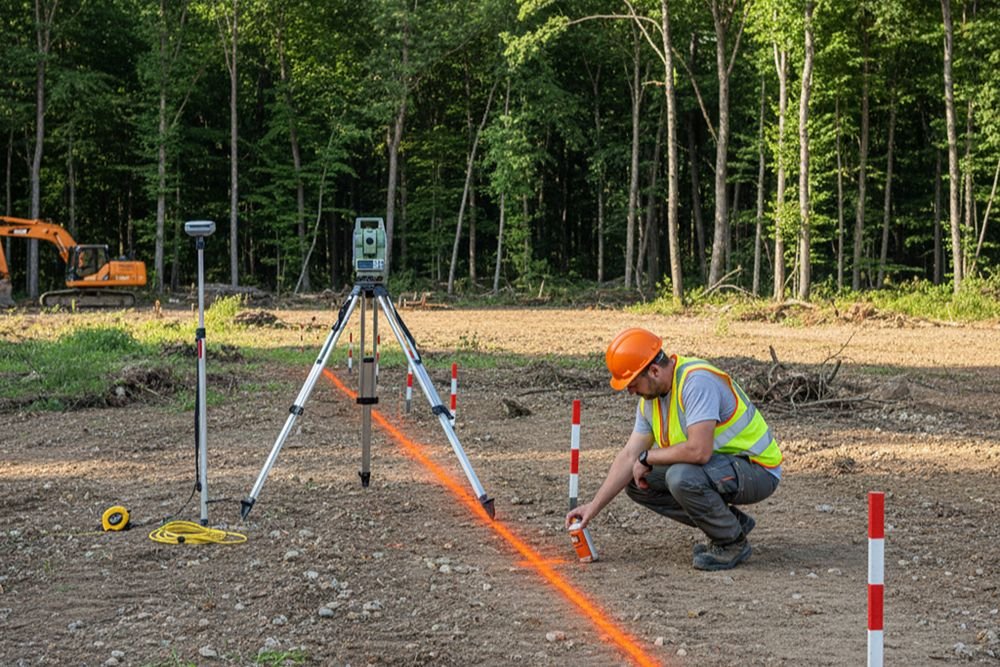
Each of these areas has different grading rules, drainage concerns, and zoning conditions.
For example:
- Downtown Cary often requires tight setback control and utility coordination
- RTP-area projects need high-precision construction staking for tech campuses
- Residential communities like Amberly need accurate subdivision layout support
- Green buffer zones near natural areas require careful topographic and drainage mapping
Many competitors skip this local detail. That’s where projects start going wrong. Cary is not a “one-size-fits-all” development market.
Common Gaps We See in Cary Land Development Projects
After reviewing many local projects, a few recurring issues show up:
- Boundary lines not fully verified before design starts
- Old topographic data used in new construction plans
- Missing utility mapping leading to conflicts during excavation
- Survey delays causing permitting bottlenecks
- Incomplete easement documentation during planning
Many surveying pages online talk generally about “accuracy” but don’t explain what actually goes wrong in real projects.
We see these issues in Cary often, especially in fast-growing residential zones and mixed-use developments.
Fixing them early saves time, money, and redesign work.
What Land Development Services Actually Include
Land development is more than just “measuring land.” It’s the foundation of everything that gets built on a site.
At Meta Geomatics PLLC, our Land Development Services support every stage of a project, from early planning to final construction layout.
Here’s what that really includes in real-world terms:
Core Survey Services
- Boundary Surveys to confirm property lines before design or purchase
- Topographic Surveys showing elevation, slopes, trees, and site features
- Construction Staking so builders know exactly where to build
- Subdivision Planning Support for new residential or mixed-use layouts
- ALTA/NSPS Land Title Surveys for lenders and commercial transactions
- As-Built Surveys to verify what was actually constructed
- Easement and Right-of-Way Mapping for access and utility planning
Supporting Development Services
- Utility mapping for water, sewer, drainage, and storm systems
- Deed research and property line verification
- Grading and earthwork analysis for site preparation
- Floodplain and elevation certificates for compliance
- GIS mapping for planning and visualization
- Drone surveying and photogrammetry for fast site coverage
This mix of services helps avoid one of the most common project issues in Cary: missing or outdated site data during design or permitting.
How Our Land Development Process Works
A lot of confusion in surveying comes from not knowing what happens next. We keep it simple and predictable.
Step 1: Project Review and Site Understanding
We start by reviewing your plans, deed records, and project goals. This includes identifying potential red flags early, like boundary gaps or missing easements.
Step 2: Field Survey Work
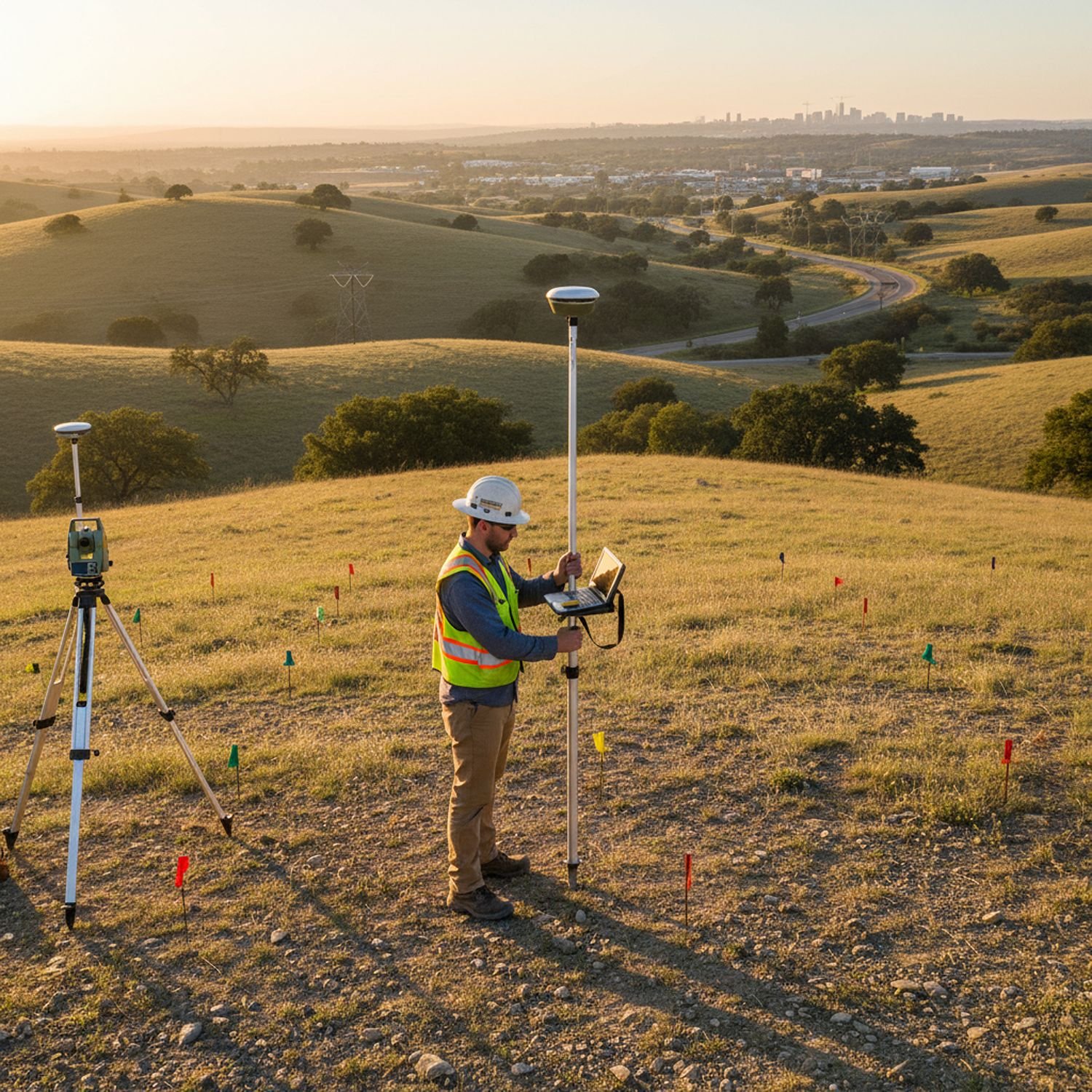
Our field crews use high-accuracy equipment to collect site data:
- GPS/GNSS RTK systems for precise positioning
- Total stations for detailed measurements
- Drone mapping for large or complex sites
- LiDAR scanning when surface detail matters
We capture everything needed to understand the site clearly.
Step 3: Data Processing and Mapping
Back in the office, we turn raw field data into usable deliverables using:
- AutoCAD Civil 3D
- GIS software
- Digital terrain modeling tools
- Survey CAD systems
This step is where raw data becomes useful for engineers and architects.
Step 4: Plan Delivery and Coordination
We deliver certified drawings that are ready for:
- Engineering design
- Permitting submissions
- Construction layout
- Financing and title review
If something looks off, we flag it early so you can adjust before it becomes a costly problem.
Step 5: Construction Support
We stay involved during construction with staking and verification surveys so what gets built matches what was designed.
Technology That Improves Accuracy and Speed
Modern land development depends on precision tools, not just experience.
We use advanced equipment and software to reduce errors and speed up delivery:
Field Technology
- GPS/GNSS RTK survey systems for real-time accuracy
- Total stations for detailed point measurements
- UAV drone mapping systems for aerial site capture
- LiDAR scanning for dense terrain or complex sites
- Digital leveling systems for elevation control
Office and Modeling Tools
- AutoCAD Civil 3D for engineering-ready drawings
- GIS mapping platforms for spatial analysis
- Survey CAD tools for boundary and plat creation
- Digital Terrain Modeling (DTM) for grading and drainage design
What this means for you
You get cleaner data, faster turnaround, and fewer surprises during construction.
Why Developers and Builders Work With Meta Geomatics PLLC
There’s a reason engineers and builders keep coming back to us in Cary.
Real local experience
We understand how Cary projects are reviewed, approved, and built. That matters more than most people think.
Accuracy that holds up in the field
We don’t just deliver drawings. We deliver field-verified data that matches real ground conditions.
Certified and compliant work
Our work follows:
- North Carolina Board of Examiners for Engineers and Surveyors rules
- ALTA/NSPS Land Title Survey standards
- FEMA floodplain mapping requirements where applicable
Fully insured and licensed
We are a Licensed North Carolina Professional Land Surveyor (PLS) and a registered PLLC, with professional liability coverage in place.
Built for real project timelines
We understand delays cost money. We focus on clear communication and dependable scheduling.
Honestly, most project issues don’t come from big mistakes. They come from missing details early on. That’s what we help prevent.
Common Gaps We See in Cary Land Development Projects
After reviewing many local projects, a few recurring issues show up:
- Boundary lines not fully verified before design starts
- Old topographic data used in new construction plans
- Missing utility mapping leading to conflicts during excavation
- Survey delays causing permitting bottlenecks
- Incomplete easement documentation during planning
Many surveying pages online talk generally about “accuracy” but don’t explain what actually goes wrong in real projects.
We see these issues in Cary often, especially in fast-growing residential zones and mixed-use developments.
Fixing them early saves time, money, and redesign work.
Final Thoughts
Land development in Cary, NC is moving fast. Projects that stay ahead are the ones built on accurate data from the start.
Meta Geomatics PLLC supports developers, engineers, and property owners with reliable land development services that reduce risk and keep projects moving. From boundary surveys to construction staking, every step is focused on clarity, accuracy, and real-world usability.
If you’re planning a project in Cary or nearby areas like RTP, Downtown Cary, or Preston, getting the survey right early can save you months later.
And that’s usually where successful projects begin.
FAQs About Land Development Services in Cary, NC
What does land development surveying include?
Land development surveying includes boundary surveys, topographic mapping, construction staking, subdivision layout support, and utility mapping. It helps engineers and builders understand the land before and during construction. In Cary, NC, it’s especially important due to zoning rules and rapid development requirements.
When do I need a land development survey?
You typically need it before designing a site, applying for permits, or starting construction. If you’re building homes, commercial buildings, or even subdividing land in Cary, a survey helps confirm boundaries, elevations, and site constraints before you invest in design or construction.
How long does a land development survey take?
It depends on the size and complexity of the site. Small residential lots may take a few days. Larger commercial or subdivision projects may take longer due to field work, data processing, and coordination. Weather and site access in Cary can also affect timelines.
What is the difference between a boundary survey and a topographic survey?
A boundary survey defines legal property lines. A topographic survey maps the physical features of the land like slopes, trees, buildings, and drainage patterns. Both are often needed together for land development projects in Cary, especially for design and permitting.
Do I need a survey for subdivision or land development approval in Cary?
Yes. Most subdivision and land development approvals require detailed surveys. Cary and Wake County authorities rely on accurate plats, grading plans, and utility layouts before approving development projects.
What technology is used in modern land surveying?
Modern surveying uses GPS/GNSS RTK systems, drones, LiDAR scanning, and CAD software like AutoCAD Civil 3D. These tools improve accuracy and help reduce field time while producing detailed site models for engineers and architects.
Why is local experience important for Cary land development projects?
Because Cary has specific zoning rules, environmental areas, and development guidelines. A surveyor familiar with local conditions helps avoid design conflicts, permitting delays, and compliance issues that can slow down construction.
Services Areas
Serving North Carolina, NC Wake County & the Greater Triangle
Raleigh Metro
- Angier
- Apex
- Carrboro
- Cary
- Chapel Hill
- Clayton
- Durham
- Fuquay-Varina
- Garner
- Hillsborough
- Holly Springs
- Knightdale
- Morrisville
- Pittsboro
- Raleigh
- Rolesville
- Wake Forest
- Wendell
- Zebulon
Charlotte Metro
- Belmont
- Charlotte
- Concord
- Cornelius
- Davidson
- Gastonia
- Harrisburg
- Huntersville
- Indian Trail
- Kannapolis
- Matthews
- Mint Hill
- Monroe
- Mount Holly
- Pineville
- Wesley Chapel
Can't find your area?
Give us a call at (919) 402-6742. We regularly take on projects throughout the Piedmont and Coastal regions of North Carolina for commercial clients with specific needs.

Reviews
Trusted by Homeowners, Contractors & Developers Across Wake County
Ready to Get Started?
Every successful property transaction and construction project starts with accurate information. Whether you need a simple boundary survey or comprehensive 3D reality capture, the Meta Geomatics team is ready to help.
Contact us today for a free, no-obligation quote:
Phone
Office Hours
Monday - Friday, 8:00 AM - 5:00 PM
Most quotes provided within 24 hours. Emergency and expedited services available.